
Close the supply valve for the fixture, or the main for your unit, if a line, a water heater or an appliance hose is feeding the water.
Service category · Santa Monica, CA
Water Extraction and Drying in Santa Monica, CA
Water is standing on your floor, squishing up through the carpet, or spreading a stain across the ceiling. Water extraction takes the liquid out of your Santa Monica home, and structural drying then pulls the moisture out of the pad, drywall, wood and concrete that soaked it up. Shut off the supply valve if the leak is still running, then call before the water moves past the surface.
What you are seeing
What the water has reached decides what is at risk
Water on a hard floor runs under the baseboards and into the bottom of every wall it touches. Water in carpet drops into the pad, and water overhead pools on top of the ceiling panel until the panel gives.
- Pooled water on hard floors
It slides under trim and cabinet bases and wets the wall bottoms where you cannot see it.
- Carpet that squishes
The pad underneath holds far more water than the surface shows and keeps the floor under it wet.
- A stain or sag overhead
Water from the unit or the roof above is collecting on the back of your ceiling.
- A wall that feels cool and damp
Water has climbed inside the wall or come through from the other side.
Choose your situation
Choose the situation that matches yours
- Emergency Water RemovalWater pooled on the floor and still spreading: close the valve and call for emergency removal before it reaches the walls.
- Structural Drying and DehumidificationWater gone but walls, framing or floors still damp: structural drying pulls the moisture out of what absorbed it.
- Wet Carpet and Flooring DryingSquishing carpet, a soaked pad or dark grout: dry the pad and the floor under it before the covering is lost.
- Ceiling and Wall Water DamageCeiling stain, sagging panel or damp wall: keep clear of the bulge and call before water in the cavity brings it down.
- Crawl Space Water RemovalWater under the house, musty floors or sagging insulation: call for crawl space removal before the joists soak it up.
- Hardwood Floor Water DamageCupped boards, dark seams or a lifting hump: call while the hardwood is still fastened and can dry flat.
- Drywall and Insulation Water DamageSoft drywall, wrinkled paper or a swollen wall base: call before wet insulation keeps the studs soaked.
- Concrete Slab and Subfloor DryingDark concrete, bouncy plywood or flooring that keeps lifting: dry the base of the floor before anything goes back over it.
- Cabinet and Vanity Water DamageSwollen sink base, split toe-kick or doors that will not close: turn off the angle stop and call before the whole run soaks.
- Attic Water DamageDamp attic insulation, stained roof boards or a ceiling drip: call before the wet insulation loads the ceiling below.
- Laminate and Vinyl Floor Water DamageSwollen laminate edges or lifting vinyl planks: call before the water trapped underneath ruins the floor and its base.
Shut off the source and stay clear of wet outlets, then call while most of the water is still liquid on the surface.
(424) 437-1293Safety protocol
Shut off the supply and keep clear of wet power
Keep out of any room where water has reached outlets, cords or a plugged-in appliance until the breaker for that circuit is off. Stay out from under a ceiling that bulges or drips from the middle, because a loaded panel can drop without warning.
Loss risk
What water does to your home while it sits
Liquid water does not stay where it landed. It moves into materials that hold it: gypsum draws it up the wall, pressed wood swells, and framing lumber takes it in slowly and gives it back more slowly still.
- Drywall
The gypsum softens from the bottom edge, and a wall that could have dried in place turns into a cut-out.
- Wood floors and subfloor
Boards cup and plywood layers separate once water gets beneath the finish.
- Cabinet bases
Pressed-wood toe-kicks soak water off the floor and split along their edges.
- Shared assemblies
In a multi-unit building the same water travels through the floor, the party wall and the pipe chase into the next home.
Triage order
Extraction and drying are two separate stages
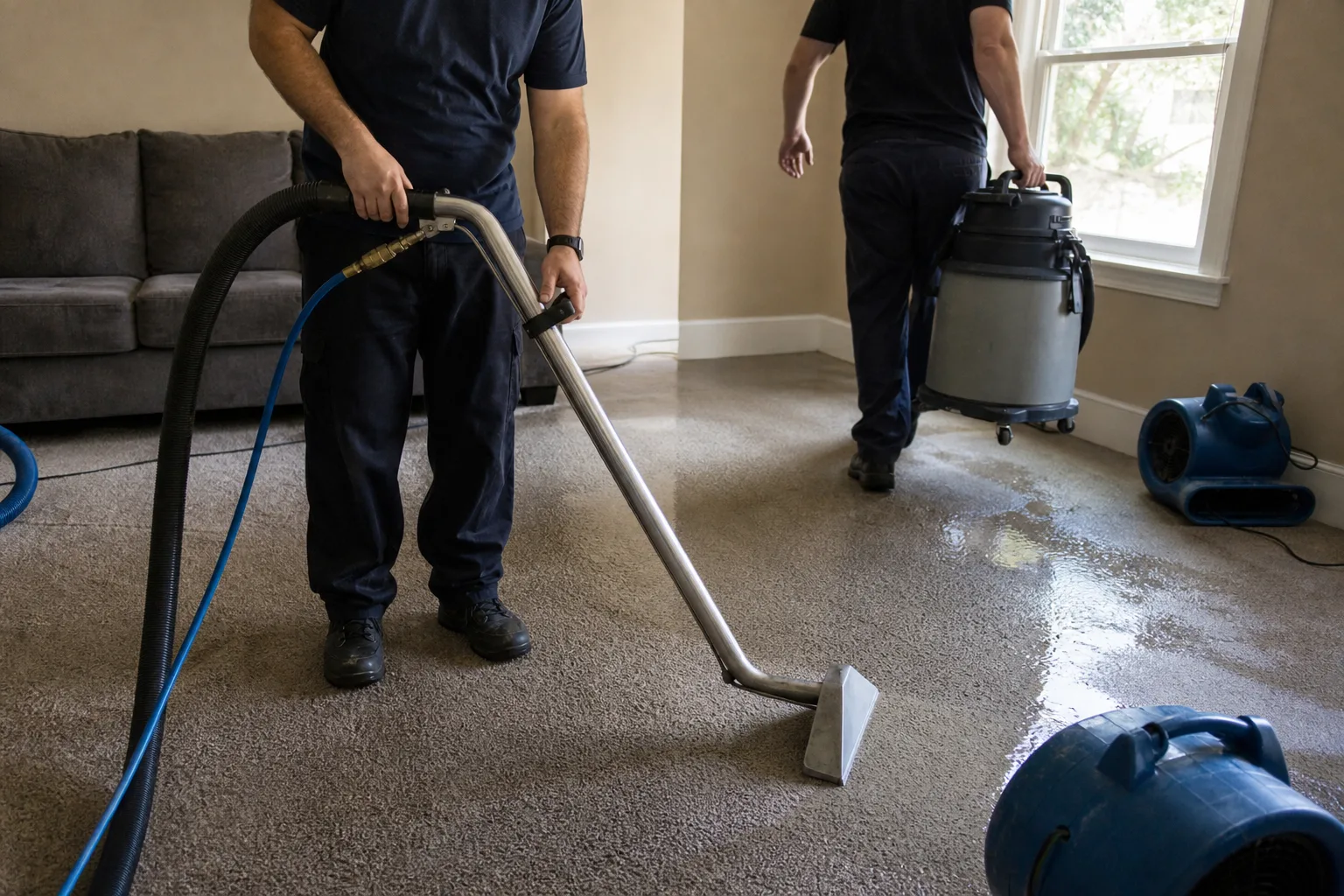
Extraction removes liquid: the water standing on your floors, held in carpet and pad, and pooled on concrete. Drying removes what soaked in, the moisture you cannot see inside wall cavities, framing, subfloor and slab.
Stopping after the first stage leaves a floor that looks dry over a structure that still reads wet. That trapped moisture keeps swelling trim, loosening tile and feeding odor until every material returns to a dry reading.
Restoration scope
What professional water extraction and drying cover
Professional extraction and drying follow the moisture readings across the whole wet area, not the outline of the stain.
- Industrial extraction
Extraction lifts standing water off hard floors and draws it out of carpet and pad together.
- Thermal moisture mapping
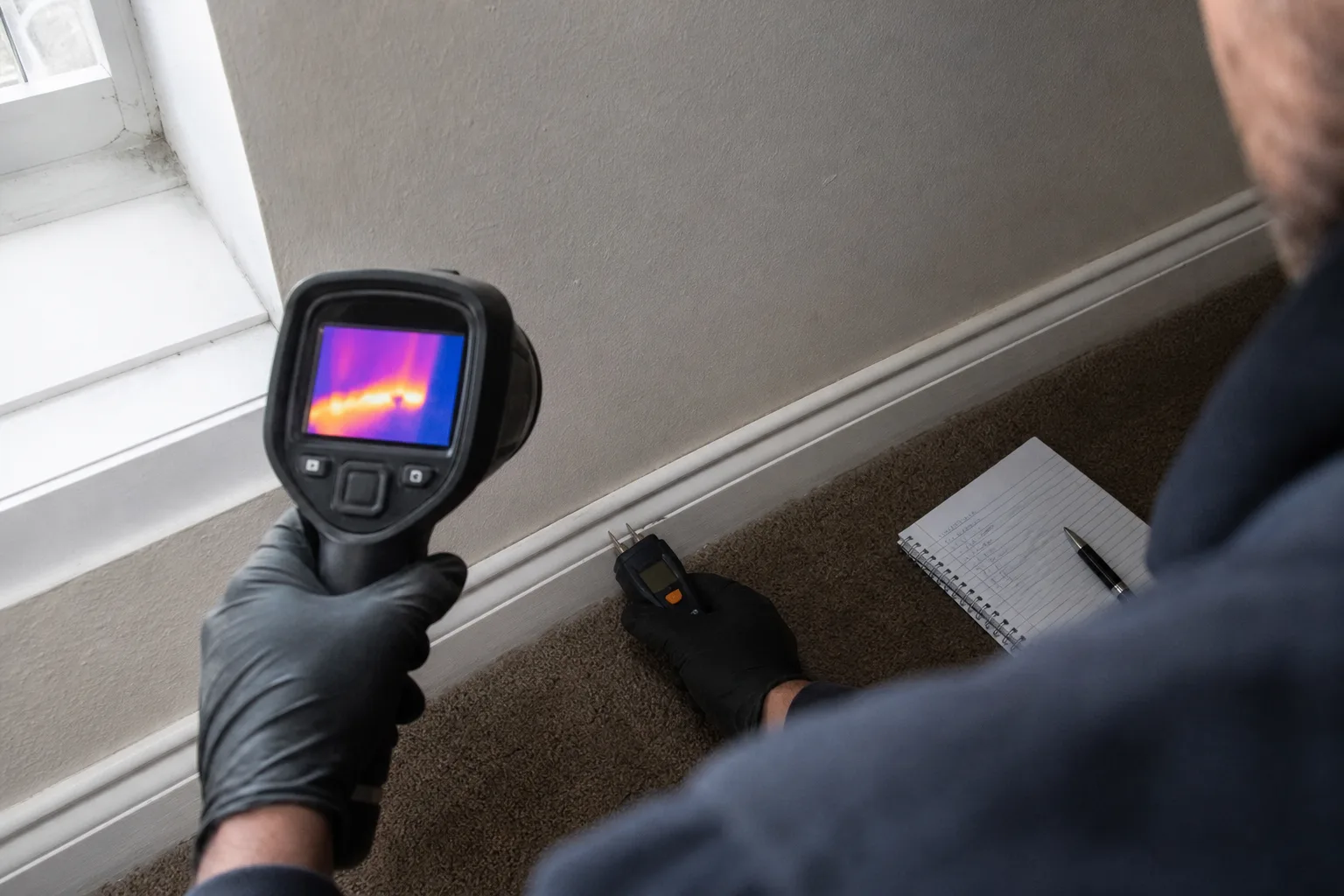
Readings across floors, walls, ceilings and cabinets trace where the water traveled past what you can see.
- Structural drying
High-capacity dehumidification and directed airflow draw moisture out of cavities, lumber and concrete.
- Drying-goal verification
Each wet material has to match a dry reference reading before the work closes.
Triage order
Why the call you make today decides the scope
Liquid water leaves a room far more easily than moisture that has already soaked into wood, gypsum and concrete. The longer it stands, the more of your flooring and drywall shifts from drying in place to coming out.
Shut off the source, photograph the wet rooms and call from Santa Monica or elsewhere in Los Angeles County while most of the water is still on the surface. Extraction at that stage keeps the most of your home intact.
Local detail
Coastal air will not finish the drying
Santa Monica sits under the marine layer, the cool, moist ocean air that keeps the coast gray on late spring and early summer days. That damp air slows evaporation indoors, so a soaked room near the beach stays wet inside its walls long after the surface feels dry: call for professional drying before the moisture sets into the framing.
Scope: Emergency extraction and structural drying clearance only. Structural rebuild and finishing carpentry are contracted separately.
Service area
Santa Monica ZIP codes
- 90401
- 90402
- 90403
- 90404
- 90405
- 90406
- 90407
- 90408
- 90409
- 90410
- 90411
Every responding technician is independent. Before work begins, confirm the technician's license, insurance and pricing with them directly.
Common questions
Water extraction and drying questions in Santa Monica
How do you know a wet room has dried?
Moisture readings decide it, not touch. Every wet wall, floor and cabinet has to match a reading taken from a dry part of your home before drying ends.
Should you wait until the floor looks dry before you call?
No. A dry-looking surface can sit over wet pad, wet wall bottoms and a damp subfloor, and that hidden moisture keeps swelling trim and lifting flooring.
What if the water came from the unit above yours?
Call about your own unit once you see the stain. Water inside a shared ceiling or wall keeps soaking your side after the drip stops showing, and your building manager needs to know the source.
Water damage keeps spreading until it is dried.
Call from Santa Monica before the water reaches the next room, the subfloor or the framing behind your walls.