
Keep out of any room where water has reached outlets, cords or a plugged-in appliance until the breaker for that circuit is off.
Service category · Santa Monica, CA
Storm and Flood Damage in Santa Monica, CA
Storm water is coming through your roof, under a door or up from the street, and the flood damage is spreading into your ceiling, walls and floors. Flood damage and storm damage start at the surface in Santa Monica and end inside the framing, so the call you make while the water is still arriving decides how much of the building you keep. Stay out of any water that touches an outlet or came in from outside, then call.
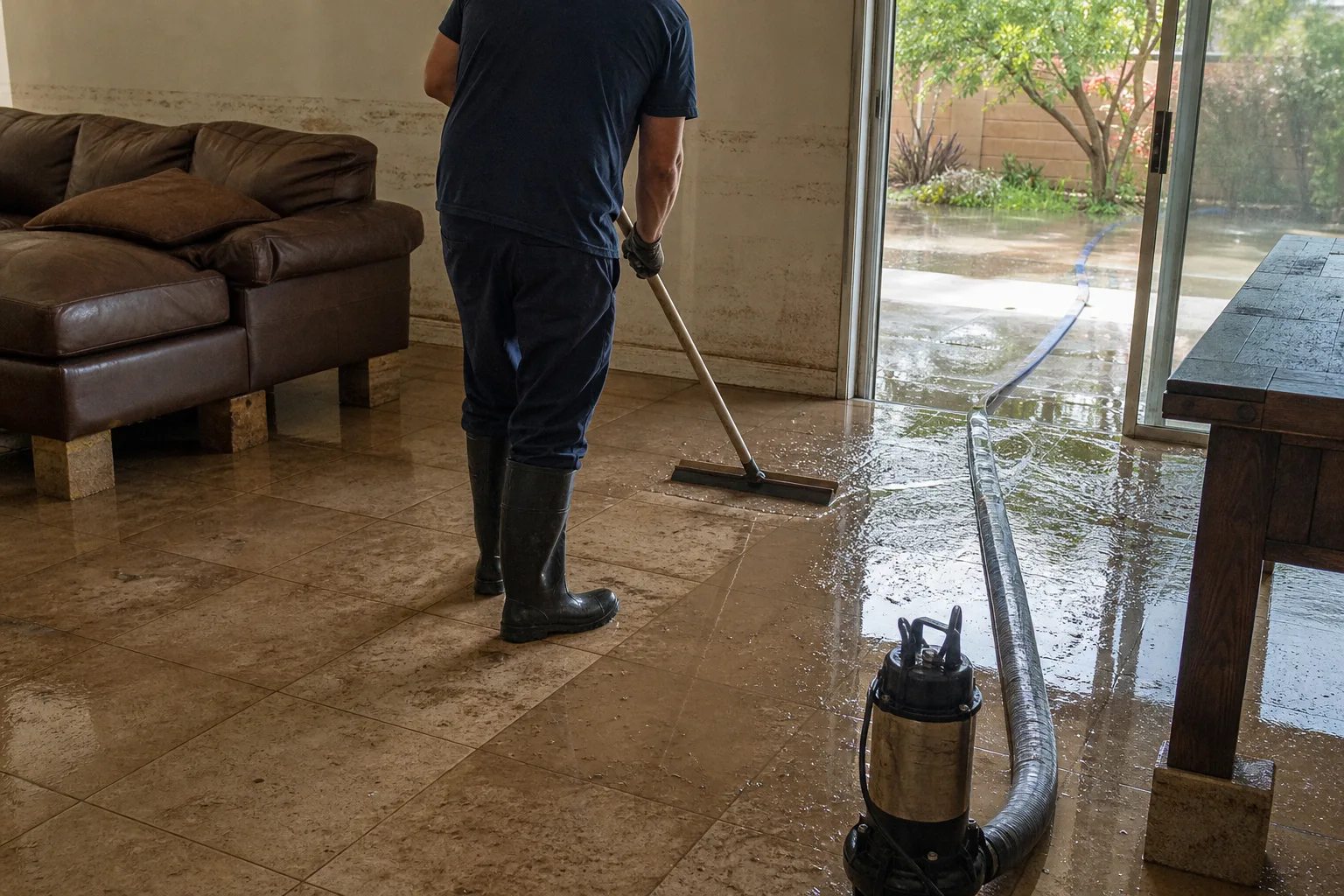
What you are seeing
Where the storm water got in
Storm water takes the weakest way into a building. It drips through roofing, seeps around windows and doors, runs down the wall from an overflowing gutter, or rises across the floor from the street.
- Roof leaks
Rain finds a gap and soaks the insulation and the ceiling panel before any stain shows.
- Door and window seams
Wind-driven rain runs past the frame and into the wall cavity beneath it.
- Overflow at the foundation
Water from a clogged gutter or storm drain pools against the building and works inward.
- Water at floor level
Moving water carries mud into the room and soaks everything it reaches.
Choose your situation
Choose the situation that matches yours
- Flood Damage RestorationFlood water across the floor: keep out of it, stay clear of wet power, and call before it soaks the walls.
- Roof Leak Water DamageRain through the ceiling or a patch that keeps spreading: call before wet insulation and drywall give way.
- Atmospheric River FloodingWater seeping in during a long storm: call while the soaking is still near the surface, not when the rain ends.
- Mudflow and Hillside Runoff CleanupMud or runoff from a slope against your walls or floor: stay clear of the ground and call before it keeps the building wet.
- Foundation Seepage and Wall LeaksDamp wall bottoms or water beading on the slab after rain: call before the seepage soaks the framing.
- Flash Flood CleanupWater surged in during a sudden downpour: keep away from energized cords and call before it settles into the floors and walls.
- Window and Door Leaks in StormsRain through a window frame or under a door: call before it soaks the sill, trim and framing beneath.
- Water in the Walls After a StormA wall that stays damp after the storm ends: call before the water settles into the studs and insulation.
- Gutter Overflow Water DamageA gutter or drain overflowing at your foundation: call before the water soaks the wall base and floor edge.
Keep clear of wet outlets and of water from outside, then call while the storm water is still on the surface.
(424) 437-1293Safety protocol
Stay out of storm water and away from wet power
Treat water that came in from the street, the beach or a drain as contaminated: it carries mud and runoff, so keep children and pets out of it.
A ceiling that bulges or drips from its middle is holding a load of water, so leave that room until it has been relieved.
Loss risk
What storm water does while it sits
Storm damage keeps growing after the rain stops. The water already inside your building keeps wicking into every material it touches, and it travels farther than the stain you can see.
- Insulation and ceiling panels
Wet insulation holds water against the panel above your head until the panel sags.
- Drywall
Gypsum draws water up from the bottom edge and softens from the inside.
- Wood floors and subfloor
Boards cup and plywood layers separate once water gets under the finish.
- Framing
Studs and plates take water in slowly and release it slowly, so a wall that feels dry can still be wet.
Restoration scope
What storm and flood damage work covers
Storm and flood damage restoration is mitigation: pulling the water and the moisture out so the structure stays. Repairs to the roof, the windows or the gutters belong to those trades, and mitigation protects your building while they do that work.
- Water extraction
Industrial extraction lifts standing water off floors and out of carpet.
- Wet-material removal
Saturated insulation, pad and drywall that cannot dry in place come out so they stop holding water against the framing.
- Structural drying
Controlled drying pulls moisture out of studs, plates, subfloor and wall cavities.
- Moisture readings
Readings at every wet surface show where the water went and when the drying is finished.
Triage order
Why the call you make during the storm matters
Every added day of wet insulation, wet drywall and wet framing moves the job from drying toward tear-out. A ceiling that could have dried in place becomes a ceiling that comes down, and a wall that needed readings becomes a wall that has to come apart.
Across Los Angeles County, the property owners who keep the most of their building call while the water is still near the surface. Stay clear of wet power, then call about the storm damage and flood damage in your Santa Monica building before the framing takes the water in.
Local detail
Storm water travels through an older multi-unit building
More than three in four Santa Monica homes sit in multi-unit buildings, and most of the city's housing was built before 1980. Water that enters at the roof or an upper unit runs down through ceilings, walls and pipe chases into the homes below, so call once you see a stain or a sag instead of waiting for the rain to end.
Scope: Emergency extraction and structural drying clearance only. Structural rebuild and finishing carpentry are contracted separately.
Service area
Santa Monica ZIP codes
- 90401
- 90402
- 90403
- 90404
- 90405
- 90406
- 90407
- 90408
- 90409
- 90410
- 90411
Every responding technician is independent. Before work begins, confirm the technician's license, insurance and pricing with them directly.
Common questions
Storm and flood damage questions in Santa Monica
Should you wait for the rain to stop before you call?
No. Water already inside keeps soaking the insulation, drywall and framing while the storm continues, and each added day turns a drying job toward a tear-out.
Is storm water that came in from outside safe to touch?
No. Water from the street, the beach or a drain carries mud and runoff. Stay out of it and keep children and pets away, especially where it reaches outlets or cords.
Does mitigation include the roof or window repair?
No. Mitigation removes the water and dries the structure. The roof, the window seals and the gutters are repaired by those trades, on their own schedule.
How do you know the building has finished drying?
Moisture readings decide it. Every wet wall, floor and ceiling has to match a reading taken from a dry part of your home before the drying ends.
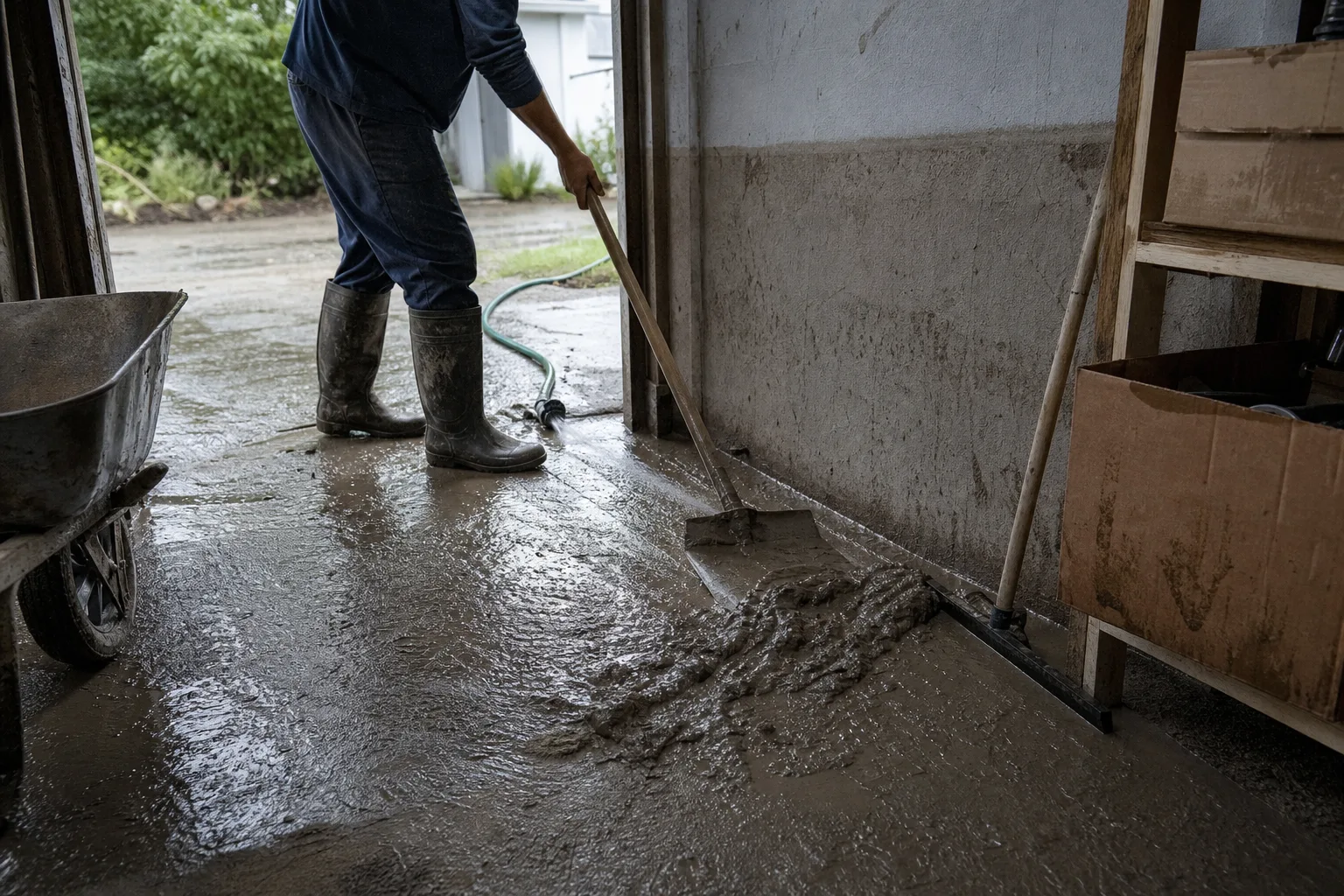
Water damage keeps spreading until it is dried.
Call from Santa Monica before the water reaches the next room, the subfloor or the framing behind your walls.