
A panel caught while it is damp and firm can often dry on the wall. Leave it wet and the core breaks down, the insulation soaks the studs, and a small cut becomes a room-wide one.
Service · Santa Monica, CA
Drywall and Insulation Water Damage in Santa Monica, CA
The drywall near your floor feels soft, the paper face has wrinkled, or the baseboard has pulled away from a swollen wall. Drywall and insulation water damage hides inside the cavity, where wet batts hold water against the studs of your Santa Monica home. Call before the gypsum crumbles and the wall has to open from end to end.
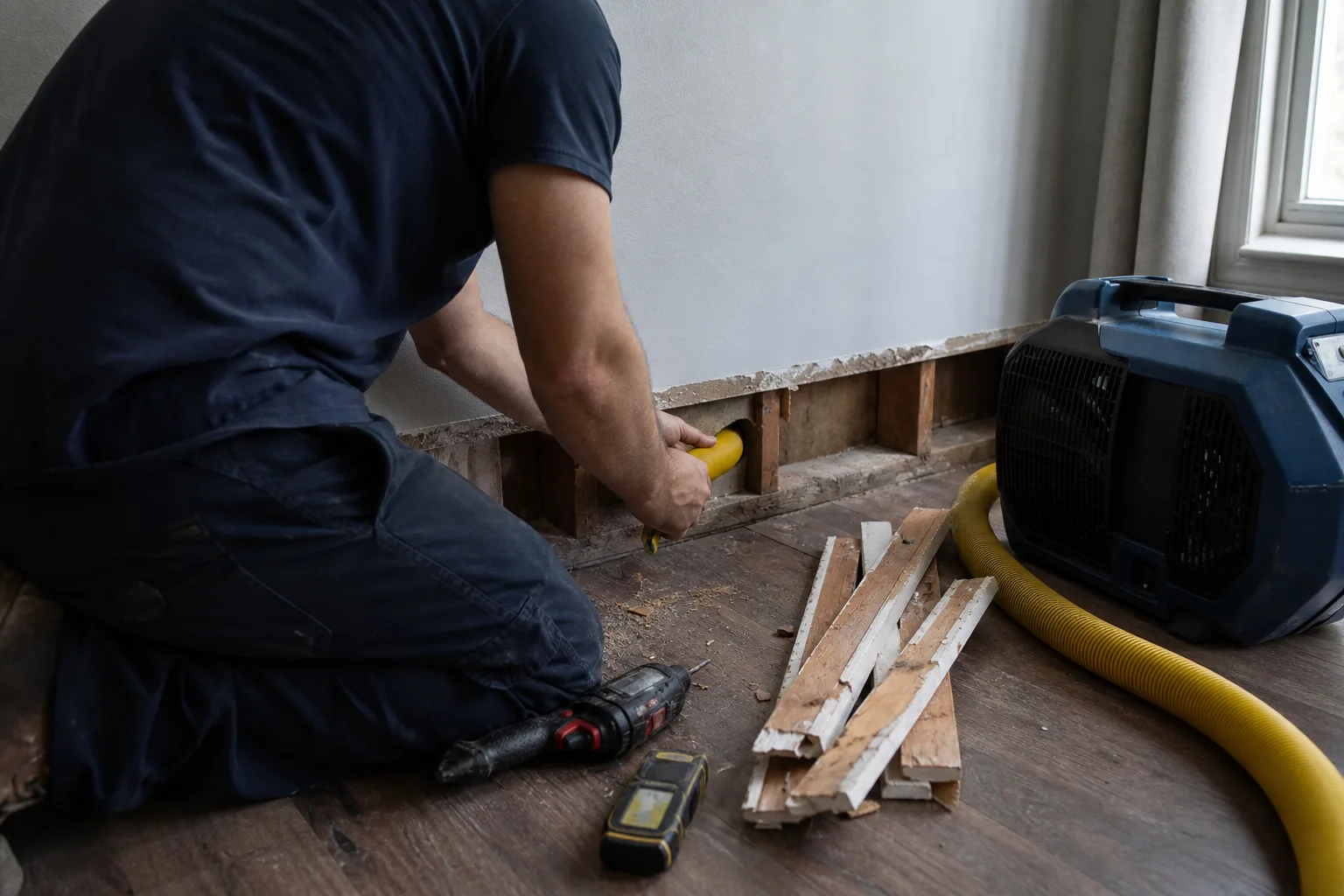
What you are seeing
A wall that gives when you press it
Gypsum board drinks water from its bottom edge and from any seam the water touches. The surface you see changes last, after the core and the insulation behind it are already wet.
- Soft spots
A panel that dents under your thumb has a saturated core.
- Wrinkled or peeling paper
The face sheet has let go of the gypsum beneath it.
- Swollen base
The wall bows out above the baseboard where the bottom edge has taken on water.
- Tide line
A faint horizontal mark shows how high the water climbed inside the panel.
- Popped fasteners
Fixing heads show through the surface as the board swells around them.
Call while the gypsum is damp but still firm, before the batts behind it soak the studs.
(424) 437-1293Loss risk
What wet drywall and insulation ruin
Wet gypsum loses its strength, and the paper on both faces holds moisture against the core. Behind it, soaked insulation slumps in the cavity and presses water onto the studs and the plate.
- Gypsum core
Once it turns soft and chalky, the board will not carry a fastener or a finish again.
- Fiberglass batts
Wet batts sag, leave the top of the cavity empty and stay wet at the bottom.
- Blown-in fill
Loose cellulose packs down when soaked and holds water against the framing.
- Sound insulation
Dense batts in the wall between two units keep water in the shared cavity.
- The far side
Water inside one wall wets the panel in the next room or the next unit.
Restoration scope
What professional drywall and insulation mitigation covers
The work sorts each wet wall into one of two paths: dry it where it stands, or cut it to a clean line and dry the cavity open.
- Depth readings
Moisture readings up the wall find the true top of the wet zone.
- Dry in place
Firm panels with no insulation behind them can dry with air fed into the cavity.
- Flood cut
Unsound board comes off along a straight line above the wet zone.
- Insulation removal
Soaked batts and fill come out, because they do not dry inside a closed wall.
- Open-cavity drying
Airflow and dehumidification dry the exposed studs and plate to a dry reading.
- Contained debris
Bagged removal keeps gypsum dust and wet fill out of your living space.
Service sequence
From a soft wall to dry studs
Wet zone measured
Readings mark how high and how far the water climbed.
Path chosen
Each wall goes to drying in place or to a measured cut.
Wet material out
Unsound board and soaked insulation leave the cavity.
Framing dried
Dry air works on the studs, the plate and the back of the opposite panel.
Cavity verified
The lumber matches a dry reference, and the wall is ready for whoever closes it.
Triage order
Firm drywall can stay; crumbling drywall cannot
Call from Santa Monica or nearby in Los Angeles County about your wet drywall and insulation while the wall still holds its shape.
Local detail
Damp coastal air keeps a closed wall wet
Under the marine layer, the air in Santa Monica stays cool and moist for long gray stretches, and a closed wall cavity has even less chance to dry than the room does. Wet insulation behind your drywall will hold its water until it comes out, so call before the studs behind it stay wet for good.
Scope: Emergency extraction and structural drying clearance only. Structural rebuild and finishing carpentry are contracted separately.
Service area
Santa Monica ZIP codes
- 90401
- 90402
- 90403
- 90404
- 90405
- 90406
- 90407
- 90408
- 90409
- 90410
- 90411
Every responding technician is independent. Before work begins, confirm the technician's license, insurance and pricing with them directly.
Common questions
Drywall and insulation questions from Santa Monica
Can wet drywall dry out and stay?
Yes, when it is still firm and the cavity behind it has no soaked insulation. Soft, swollen or crumbling board has to come off.
Why does wet insulation have to go?
Insulation holds water against the studs and does not dry inside a closed wall. Removing it lets the framing dry.
How high does the cut go?
Readings decide. The cut runs along a straight line above the highest wet reading, not above the visible stain.
Does the neighbor's side of the wall get wet too?
It can. Water in a shared cavity wets both panels, so tell your building manager when a wall between two units is involved.
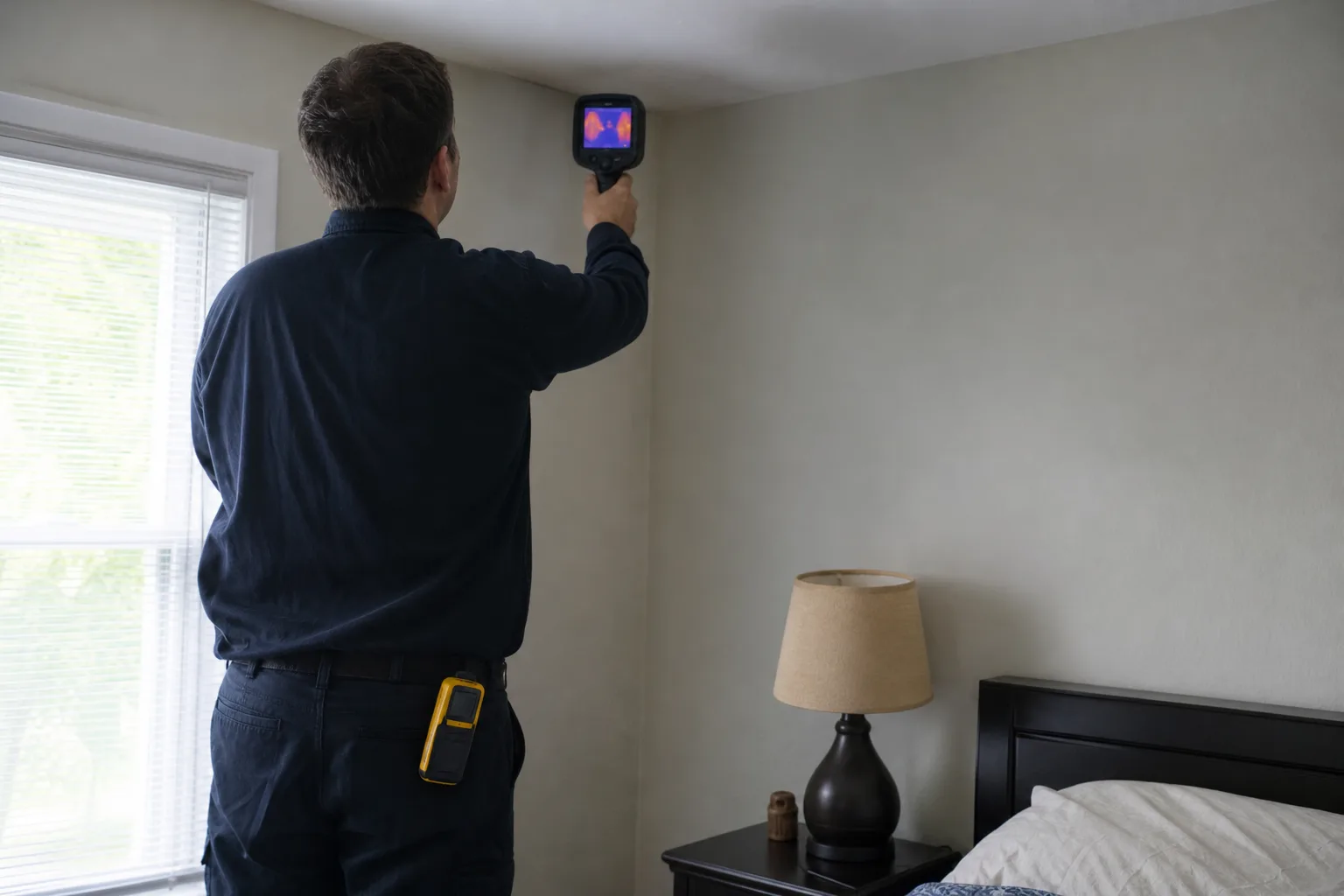
Water damage keeps spreading until it is dried.
Call from Santa Monica before the water reaches the next room, the subfloor or the framing behind your walls.