
A slab or subfloor that looks dry on top can still fail a moisture test. Flooring you lay over it seals the water in, and the failure shows up later as lifting boards, loose tile or a low spot.
Service · Santa Monica, CA
Concrete Slab and Subfloor Drying in Santa Monica, CA
The flooring is up or lifting, and the concrete slab under it stays dark, or the subfloor feels bouncy and squeaks where it used to be solid. Concrete slab and subfloor drying takes out the moisture that the base of your floor absorbed during a leak in your Santa Monica home. Call before that moisture pushes into whatever sits on top of it.
What you are seeing
A floor base that never quite dries
Concrete and plywood both take in water during a leak and release it far more slowly than the room around them. The evidence shows up in what sits on top.
- Dark patches
Concrete that stays darker in one area of your floor still holds water below the surface.
- White powder
A chalky deposit on the concrete marks moisture carrying salts up as it evaporates.
- Bouncy plywood
A subfloor that gives underfoot has started to come apart between its layers.
- Squeaks
Swollen panels rub on their fasteners and on each other.
- Loose tile or boards
Your flooring releases when the adhesive beneath it stays wet.
Call before anything gets laid over a slab or subfloor that still reads wet.
(424) 437-1293Loss risk
What a wet slab or subfloor does to the floor above
The base of a floor stores water. A slab holds it in its pores and a wood subfloor holds it between its plies, and both push that moisture upward into whatever covers them.
- Adhesives
The bond under tile, sheet goods and wood softens and lets go when vapor keeps arriving from below.
- Plywood and OSB
The layers swell at the edges and separate, and the panel loses its stiffness.
- Levelling board
Pressed board under thin flooring swells into ridges that show through.
- New flooring
Material you lay over a damp base cups, bubbles or lifts within the first season.
- Bottom plates
Your wall framing that rests on a wet base takes water from it.
Restoration scope
What professional slab and subfloor drying covers
Drying the base of a floor takes longer than drying a wall, and the proof comes from the material itself, not from the surface.
- In-material readings
Readings taken in the concrete and through the plywood show moisture at depth.
- Covering removal
Wet pad and failed flooring come up so the base under your floor can release its water.
- Sealed surface drying
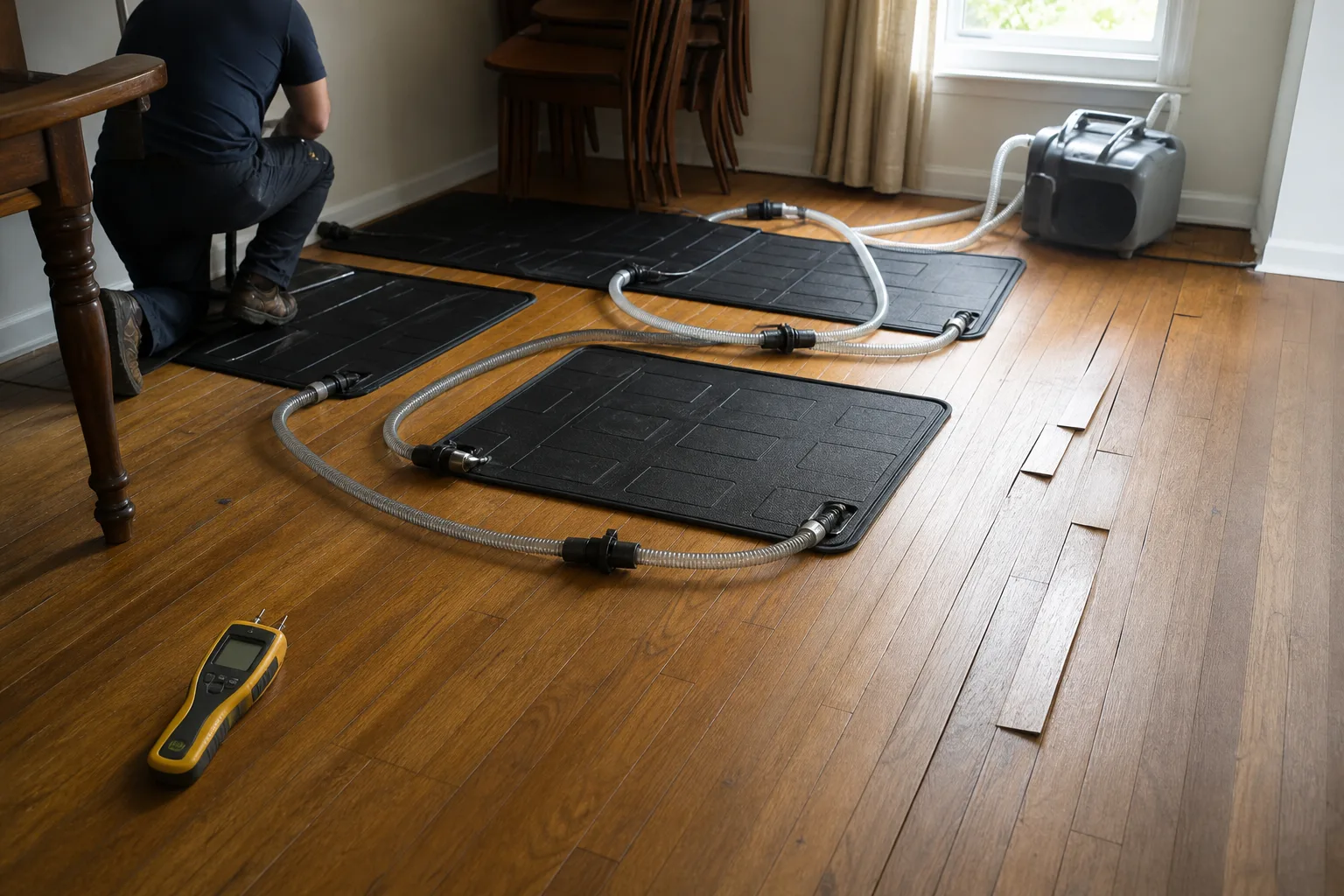
Dry, warm air held against the concrete under a sealed cover draws moisture out of the pores.
- Both-face drying
Where the underside is reachable, a wood subfloor dries from above and below together.
- Vapor testing
A final moisture test tells you whether the base can take flooring again.
Service sequence
How the base of a floor gets back to dry
Base uncovered
Wet coverings come up over the wet area.
Depth measured
Readings set how much water the concrete or plywood holds.
Drying zone built
A sealed zone isolates the wet section so dry air concentrates on it.
Monitored drying
Readings repeat at the same points as the base releases moisture.
Base cleared
The slab or subfloor tests dry before the area goes back to you for new flooring.
Triage order
Covering a damp base traps the problem
Call from Santa Monica or elsewhere in Los Angeles County about drying your slab or subfloor before you close the floor up.
Local detail
An upper-floor subfloor sits over another ceiling
More than three in four Santa Monica homes are in multi-unit buildings, so the wet subfloor in your unit is often the top of the ceiling in the unit below. Moisture left in that assembly keeps moving down as well as up: call about drying it, and let your building manager know which room leaked.
Scope: Emergency extraction and structural drying clearance only. Structural rebuild and finishing carpentry are contracted separately.
Service area
Santa Monica ZIP codes
- 90401
- 90402
- 90403
- 90404
- 90405
- 90406
- 90407
- 90408
- 90409
- 90410
- 90411
Every responding technician is independent. Before work begins, confirm the technician's license, insurance and pricing with them directly.
Common questions
Slab and subfloor drying questions in Santa Monica
How long does concrete hold water after a leak?
Far longer than the surface suggests. Readings in the concrete, not the look of it, show when the moisture has left.
Can new flooring go down once the top feels dry?
Not until the base passes a moisture test. Flooring over damp concrete or plywood lifts, cups or loses its bond.
Does a wet subfloor always have to come out?
No. Plywood that is still stiff can dry in place. Panels that have separated or turned mushy are the ones that come out.
Why does the floor squeak after a leak?
Swollen subfloor panels move on their fasteners. Squeaks that started after water damage point to a base that took on moisture.
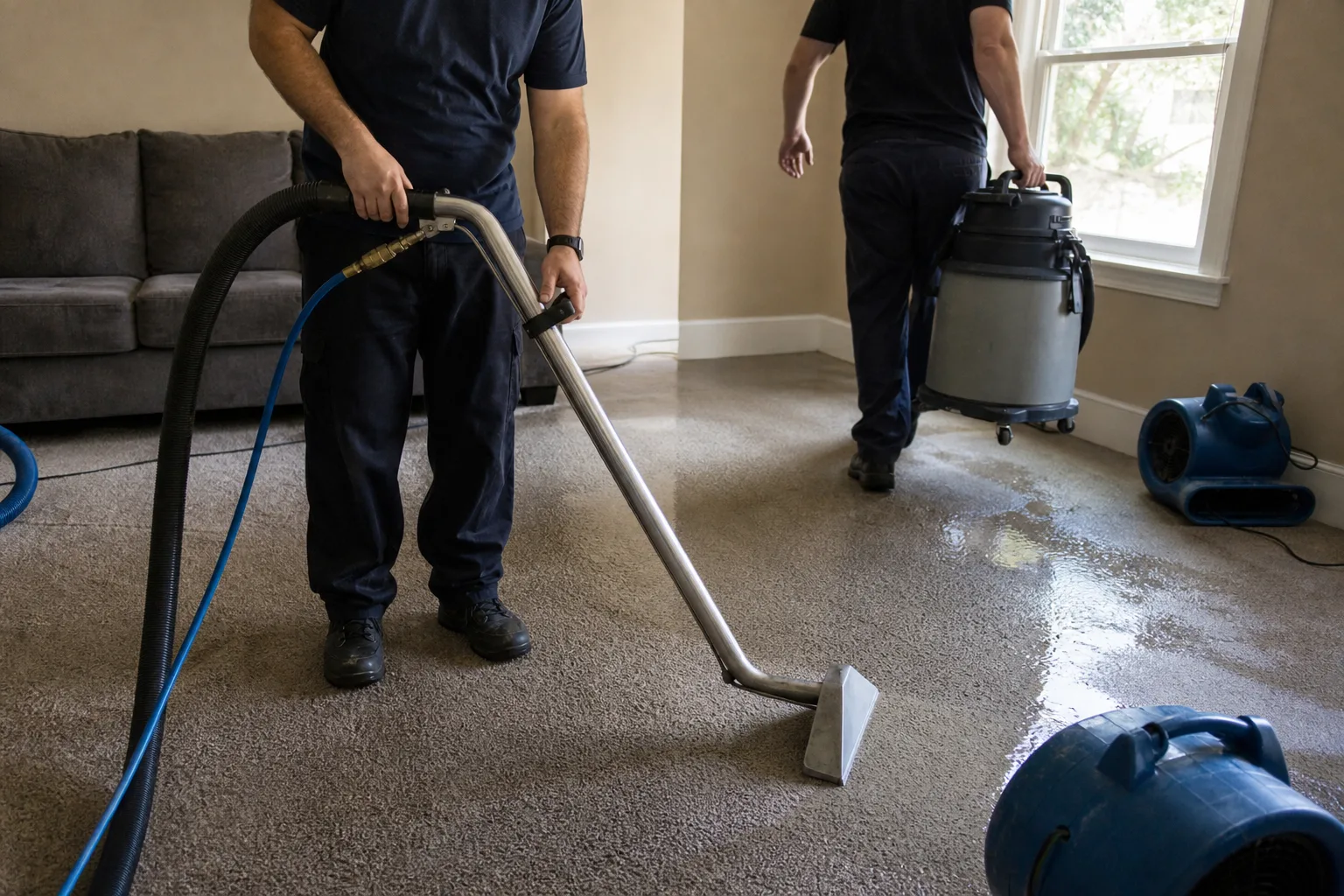
Water damage keeps spreading until it is dried.
Call from Santa Monica before the water reaches the next room, the subfloor or the framing behind your walls.