
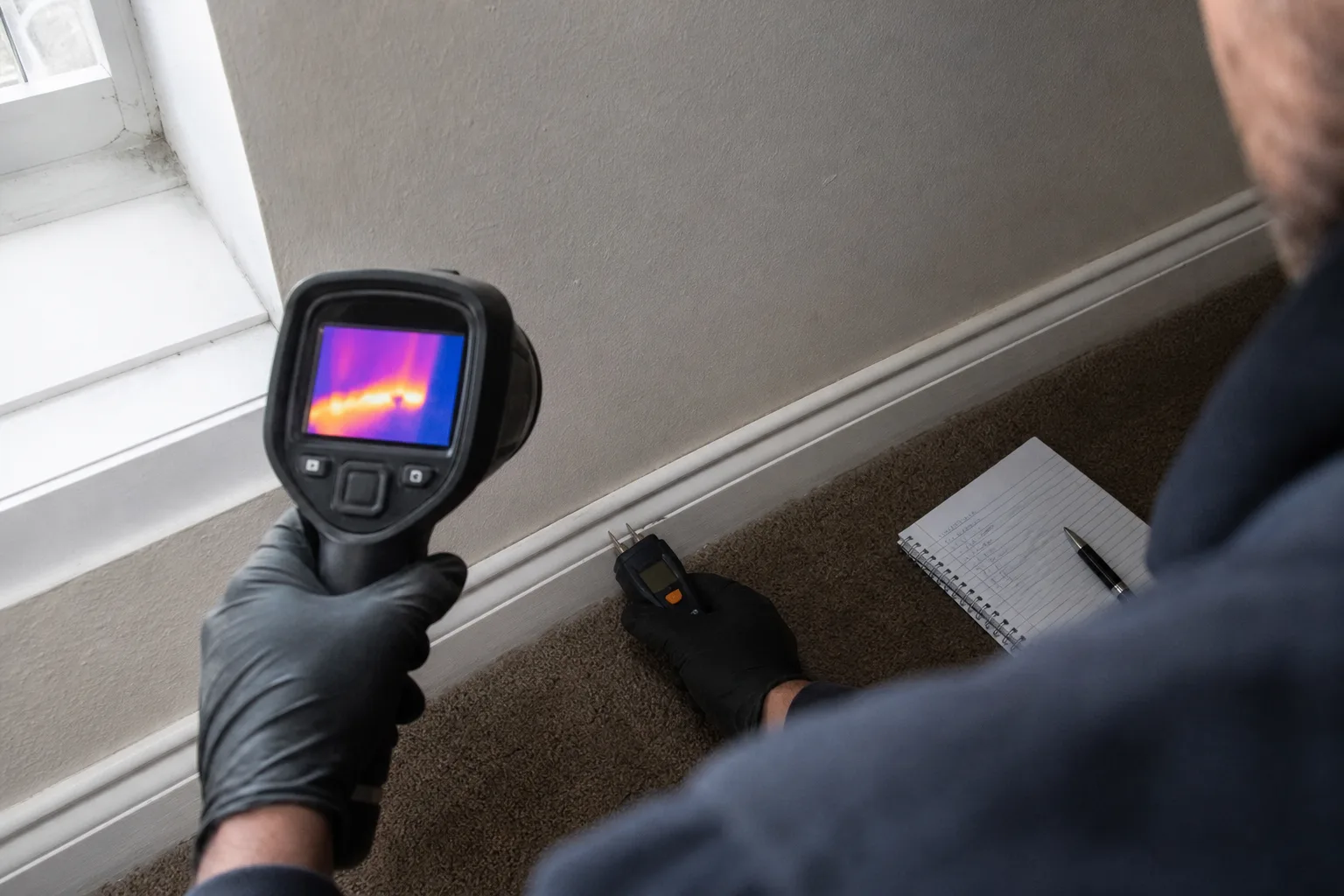
A wall that feels dry to your hand can still read wet at the sill plate. Moisture readings at marked points, compared with a dry room in your home, are the only proof that drying has finished.
Service · Santa Monica, CA
Structural Drying and Dehumidification in Santa Monica, CA
The standing water is gone, but your baseboards still feel damp, the wall reads wet near the floor, and the room smells stale. Structural drying and dehumidification pull the moisture that soaked into framing, wall cavities and subfloor back out of your Santa Monica home. Call while those materials can still dry in place.
What you are seeing
The floor looks dry and the room still feels damp
Extraction took out the water you could see, yet the bottom of the wall stays cool to the touch and the paint has started to blister. That moisture sits inside the gypsum, the studs and the sill plate, where no surface wipe reaches it.
- Damp baseboards
Trim that keeps darkening or swelling after the floor is clear marks water inside the wall.
- Stale odor
A smell that lingers in one room points to wet materials behind the finishes.
- Blistered paint
Bubbles low on the wall show moisture pushing out through the surface.
- Sticking doors
A door or drawer that binds after a leak means the wood around it has taken on water.
Call while your studs and wall panels can still dry where they stand, before the trim starts to swell.
(424) 437-1293Loss risk
What trapped moisture keeps destroying
Moisture inside the structure keeps working after the puddle has dried up. Lumber that stays wet starts to decay at the sill plate, and pressed-wood subfloor and trim swell until their fasteners let go.
- Sill plates and studs
The bottom of the framing absorbs water from the floor and the cavity and stays wet longest.
- Closed cavities
Humid air sits against the back of the wall panel and the insulation with nowhere to go.
- New finishes
Flooring or coatings applied over damp materials lift, cup or peel later.
Restoration scope
What structural drying and dehumidification cover
Structural drying targets the materials, not the room air alone: the goal is a dry reading in every wet stud, panel and floor section.
- High-capacity dehumidification
Dehumidification strips water vapor from the air as the materials release it, so it cannot settle back into them.
- Directed airflow
Air moving across wet surfaces and into cavities draws moisture out of gypsum and lumber.
- Structural cavity drying
Small openings at the base of a wall feed dry air into the cavity without stripping the whole wall.
- Heat-assisted drying
Added warmth inside the drying zone helps dense lumber and concrete release their water.
- Containment
Sealed drying zones hold the dry air on the wet area instead of the whole home.
- Moisture logs
Readings at the same marked points on each visit track every material toward its dry goal.
Service sequence
How a drying job moves from wet to dry
Baseline readings
A reading from an unaffected room sets the dry goal for each material.
Zone set-up
Containment and dehumidification go in around the wet area.
Monitoring
Readings at the marked points show each material moving toward its goal.
Adjustments
Readings that stall point to a hidden wet pocket or a leak still feeding the area, and the drying plan changes to reach it.
Dry goal met
Drying ends when the last wet material matches its goal.
Local detail
Marine air slows every drying job on the coast
The marine layer holds cool, moist ocean air over Santa Monica, most of all on gray late spring and early summer days. Indoor air that damp cannot pull water out of wet studs and wall panels, so a room left to dry by itself stays wet inside: call for professional dehumidification before the moisture sets into the framing.
Drying verified
Readings, not touch, prove a wall is dry
Triage order
Hidden moisture keeps working while you wait
Moisture you cannot see does steady damage: trim swells, the sill plate softens, and the odor settles into the room. The sooner drying starts, the more framing and drywall stay in place.
Call about structural drying for your Santa Monica home, or anywhere nearby in Los Angeles County, before damp walls turn into a cut-out.
Scope: Emergency extraction and structural drying clearance only. Structural rebuild and finishing carpentry are contracted separately.
Service area
Santa Monica ZIP codes
- 90401
- 90402
- 90403
- 90404
- 90405
- 90406
- 90407
- 90408
- 90409
- 90410
- 90411
Every responding technician is independent. Before work begins, confirm the technician's license, insurance and pricing with them directly.
Common questions
Structural drying questions from Santa Monica homes
Why is the wall still wet when the floor has dried?
Wall panels and studs absorb water from the floor and hold it inside the cavity. The surface can feel dry while the gypsum and the sill plate still read wet.
Does every wet wall have to come out?
No. Cavity drying saves many walls in place when drying starts early. Material that has broken down past recovery is the part that comes out.
How do you know when drying has ended?
Each material has to match a dry reading from an unaffected part of your home. Readings, not appearance, close the job.
Can the air conditioning dry the room instead?
Cooling lowers the temperature but leaves water inside framing, cavities and subfloor. Structural drying works on the materials themselves.
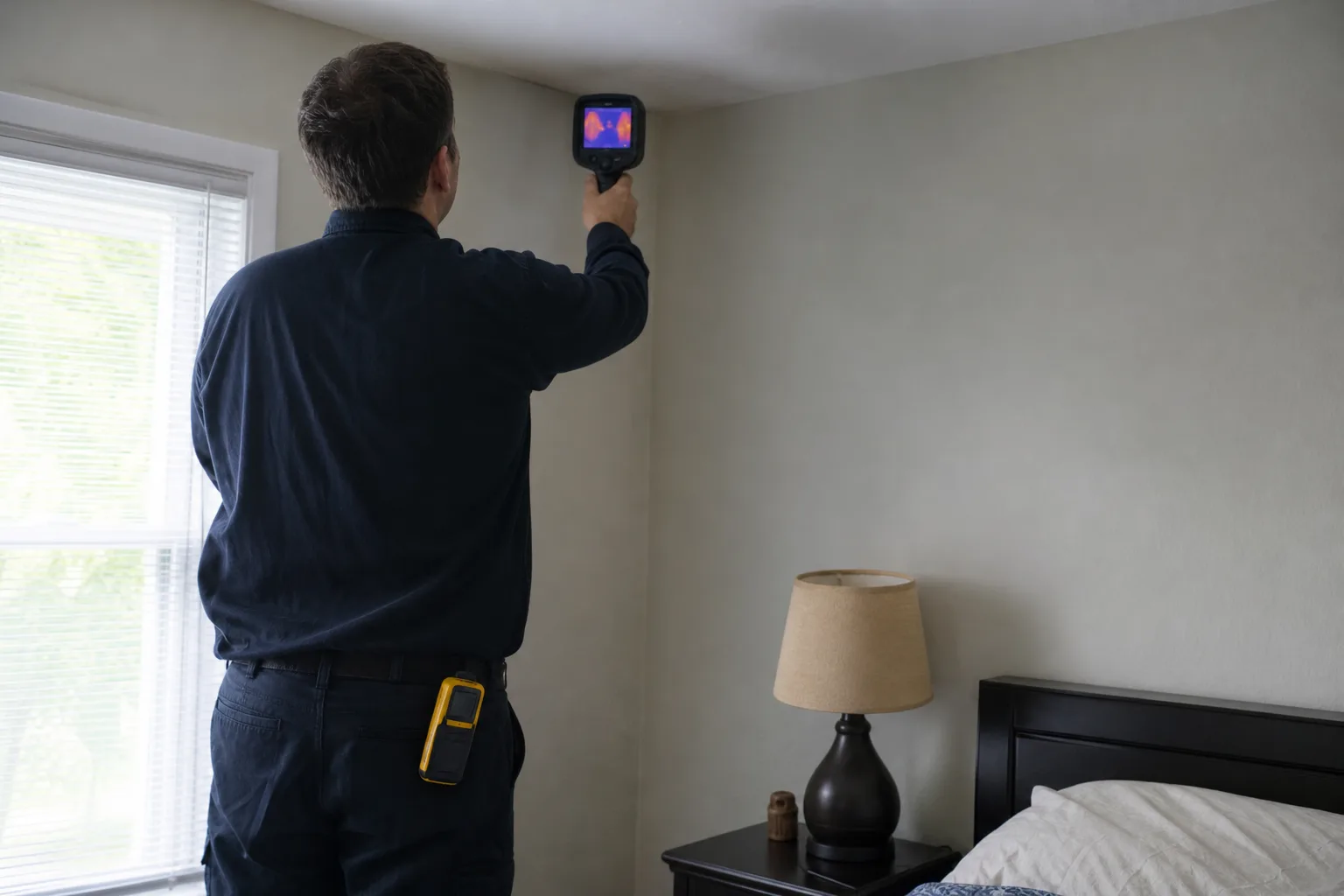
Water damage keeps spreading until it is dried.
Call from Santa Monica before the water reaches the next room, the subfloor or the framing behind your walls.