
Shut the zone valve at the controller or the valve box if you can reach it without standing in water. Keep clear of low outlets and anything plugged in at floor level that the water has reached until the power there is off.
Service · Santa Monica, CA
Irrigation Line Break Water Damage in Santa Monica, CA
A broken irrigation line is soaking the ground at your foundation, and water is coming in at the floor edge, the garage slab or the wall base. Irrigation line break water damage begins in the yard, but the water works through the stem-wall line and into your flooring and lower walls in your Santa Monica home. Shut the zone valve, keep clear of wet outlets, and call once the water reaches the structure.
What you are seeing
A line that breaks outside and floods the wall base
Sprinkler heads, drip emitters and a valve box sit at the stem wall, and a break at any of them feeds water into the backfill against your wall. Bark mulch and planters keep that water pooled at the perimeter, where it has nowhere to go but down and in.
A geyser from a cracked sprinkler head: Water is saturating the backfill at your wall.
A planter that stays swampy: A below-grade line is leaking at the stem wall.
Dampness at the garage slab or the floor edge: Waterlogged ground is pushing water inside.
A musty wall base in a ground-floor room: Water has crossed the sill line and is wicking up the drywall.
Shut the zone valve and stay clear of wet outlets at floor level, then call once water crosses into the structure.
(424) 437-1293Safety protocol
Shut the zone valve and respect the outlets near the floor
Loss risk
How yard water turns into indoor damage
A broken line can run for days before anyone sees a puddle, and the backfill against your wall drinks every drop. The water then takes the path of least resistance, which is the joint where the wall meets the slab.
Drip tubing splits where emitters clog, a failed valve diaphragm leaves a zone running overnight, and a band of lawn that turns greener against the wall often marks the break. The water keeps coming until someone shuts the zone.
- Sill line and slab edge
Water migrates through the joint and into the base of the wall.
- Stem wall below grade
The concrete wicks moisture up from the saturated backfill and carries it to the sill plate.
- Perimeter flooring
Planks and underlayment at the perimeter walls cup and stain.
- Garage slabs and raised floors
Concrete and crawl spaces hold the water for a long time.
Restoration scope
What irrigation line break water damage work covers
This work covers the water inside your building and nothing in the yard. Fixing the line, resetting the controller and swapping heads belong to a landscaper or a plumber.
- Perimeter mapping
Moisture readings follow the dampness the full length of the outer walls to locate where the water crossed the sill line.
- Garage and low-room extraction
A pump-out lifts water from the garage slab and the rooms nearest the planters.
- Wall-base opening
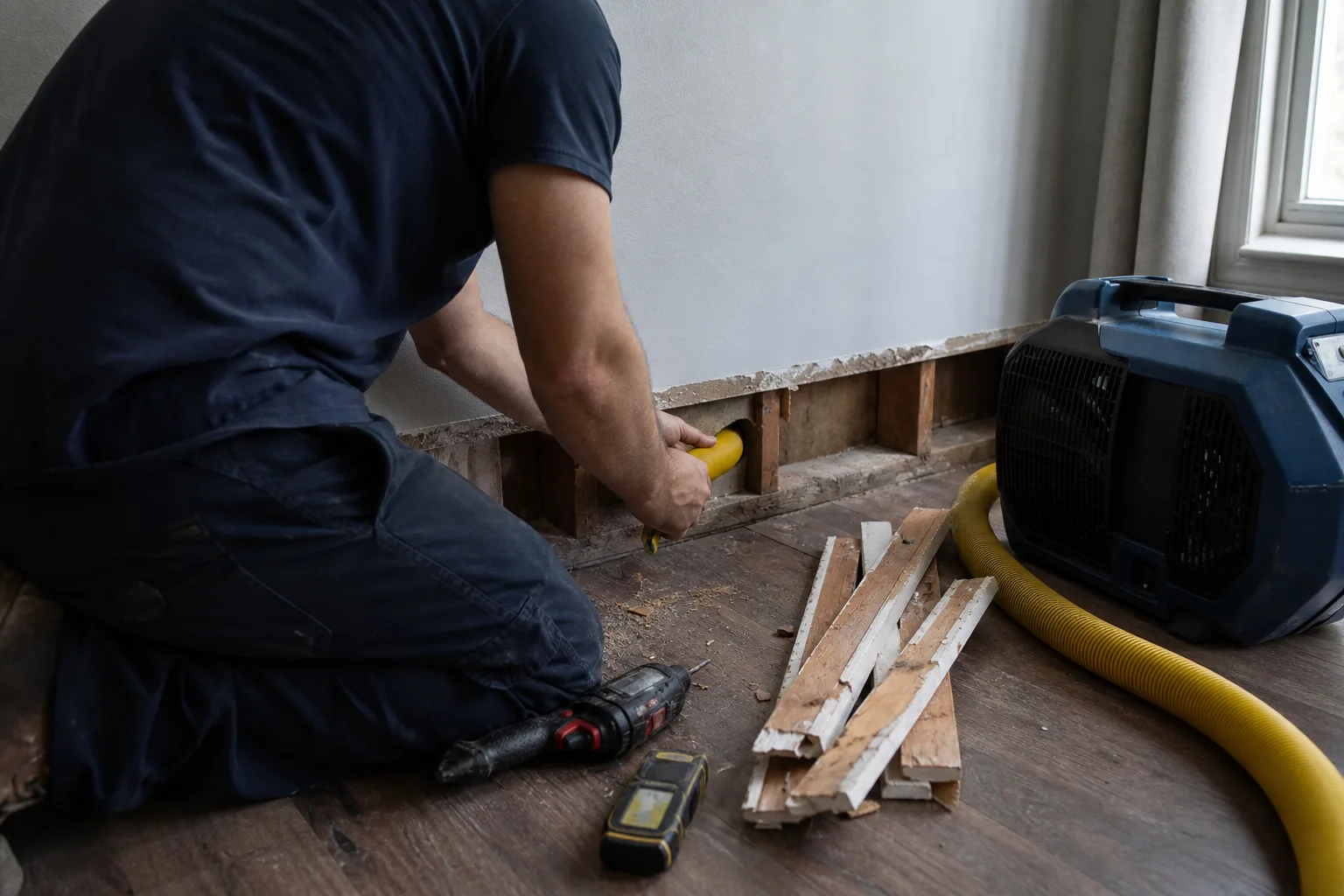
Soaked drywall and trim come off so the sill plate can release its water.
- Slab-edge drying
Measured drying follows the concrete under the walls until readings drop.
Service sequence
How the work moves from the wall base inward
Valve box closed
You shut the irrigation zone so the underground line stops feeding the backfill.
Perimeter mapped
Moisture readings mark where the water crossed into the structure.
Low rooms pumped out
A pump-out clears the garage slab and the rooms closest to the planters.
Wall base dried
Measured drying follows the sill plate and the slab edge.
Outer walls confirmed
Readings at the perimeter walls equal those of an interior wall the water never reached.
Local detail
Ground-floor homes take the irrigation water first
More than three in four Santa Monica homes sit in multi-unit buildings, and ground-floor units often face landscaped courtyards and planters. A broken irrigation line there can drive water through the wall base of your home, so call once you see dampness at the floor edge.
Triage order
Why a leak in the yard still needs a call
Water that sits against a stem wall keeps pushing in for as long as the ground stays wet. A job that began at the floor edge can reach your framing, your flooring and the room after it.
Shut the zone valve and call about irrigation line break water damage in your Santa Monica home in Los Angeles County once water reaches the structure.
Scope: Emergency extraction and structural drying clearance only. Structural rebuild and finishing carpentry are contracted separately.
Service area
Santa Monica ZIP codes
- 90401
- 90402
- 90403
- 90404
- 90405
- 90406
- 90407
- 90408
- 90409
- 90410
- 90411
Every responding technician is independent. Before work begins, confirm the technician's license, insurance and pricing with them directly.
Common questions
Irrigation line break water damage questions in Santa Monica
Does the work include repairing the irrigation line?
No. A landscaper or a plumber repairs the line and the sprinkler heads. Mitigation covers the water inside your building.
How can yard water damage the inside of the house?
Saturated backfill pushes water through the joint where the wall meets the slab, and it wicks into the wall base and flooring.
Is a damp garage slab worth a call?
Yes. A damp slab edge marks water that has crossed the stem-wall line and is heading for the lower walls.
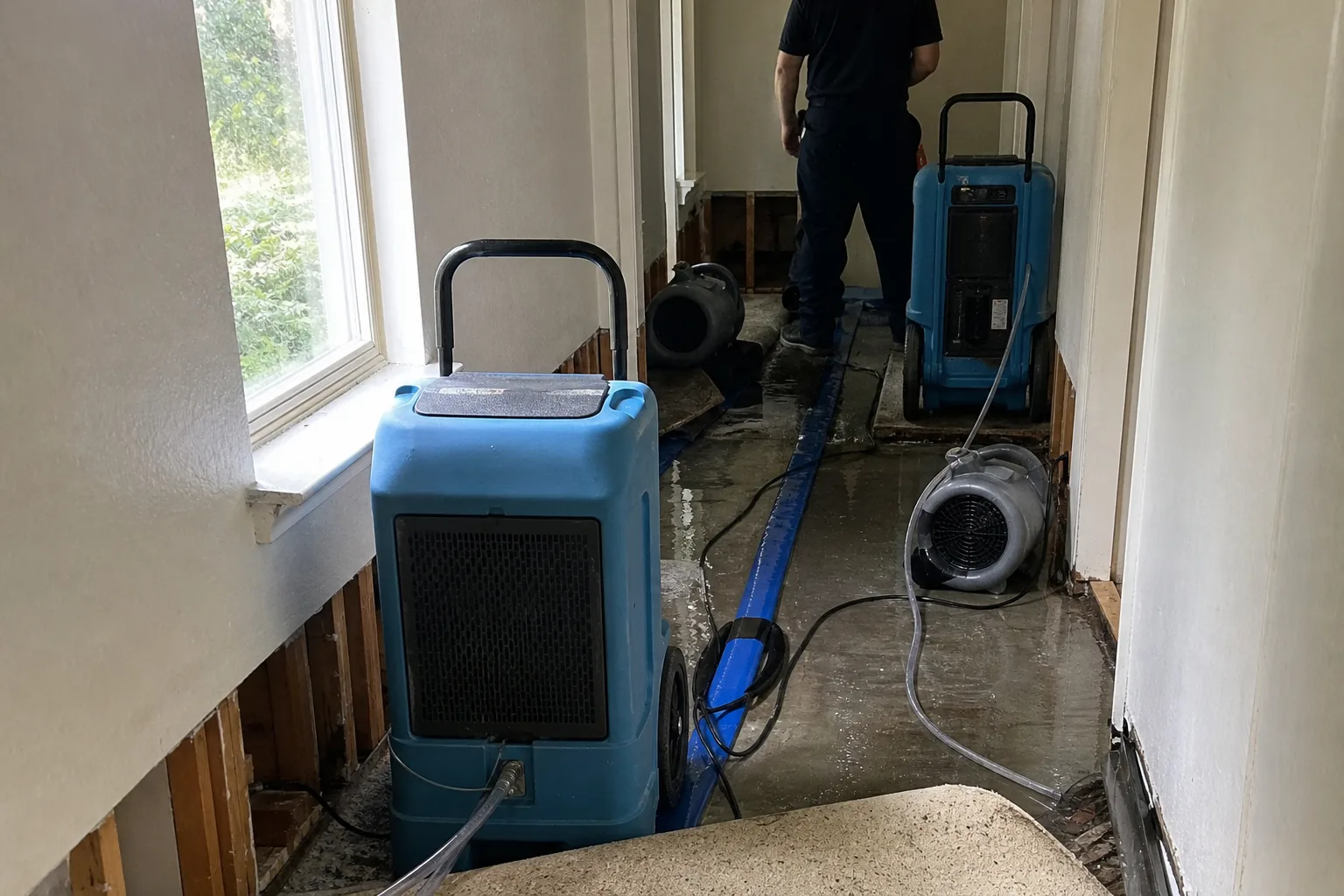
Water damage keeps spreading until it is dried.
Call from Santa Monica before the water reaches the next room, the subfloor or the framing behind your walls.