
Stay out until the fire department releases the building. Water that passed through burned materials carries soot, ash and melted debris, so keep your skin and your household out of it. Leave the power off in every wet room until a professional confirms the wiring is safe.
Service · Santa Monica, CA
Firefighting Water Extraction and Drying in Santa Monica, CA
The fire is out, and the water that stopped it is sitting on your floors, dripping through the ceiling below and soaking into charred walls. Firefighting water brings soot and ash into every room it enters, and it keeps wetting your framing and subfloor until extraction and drying take it out. Wait until the fire department clears your Santa Monica property for entry, then call before it wets more of the building.
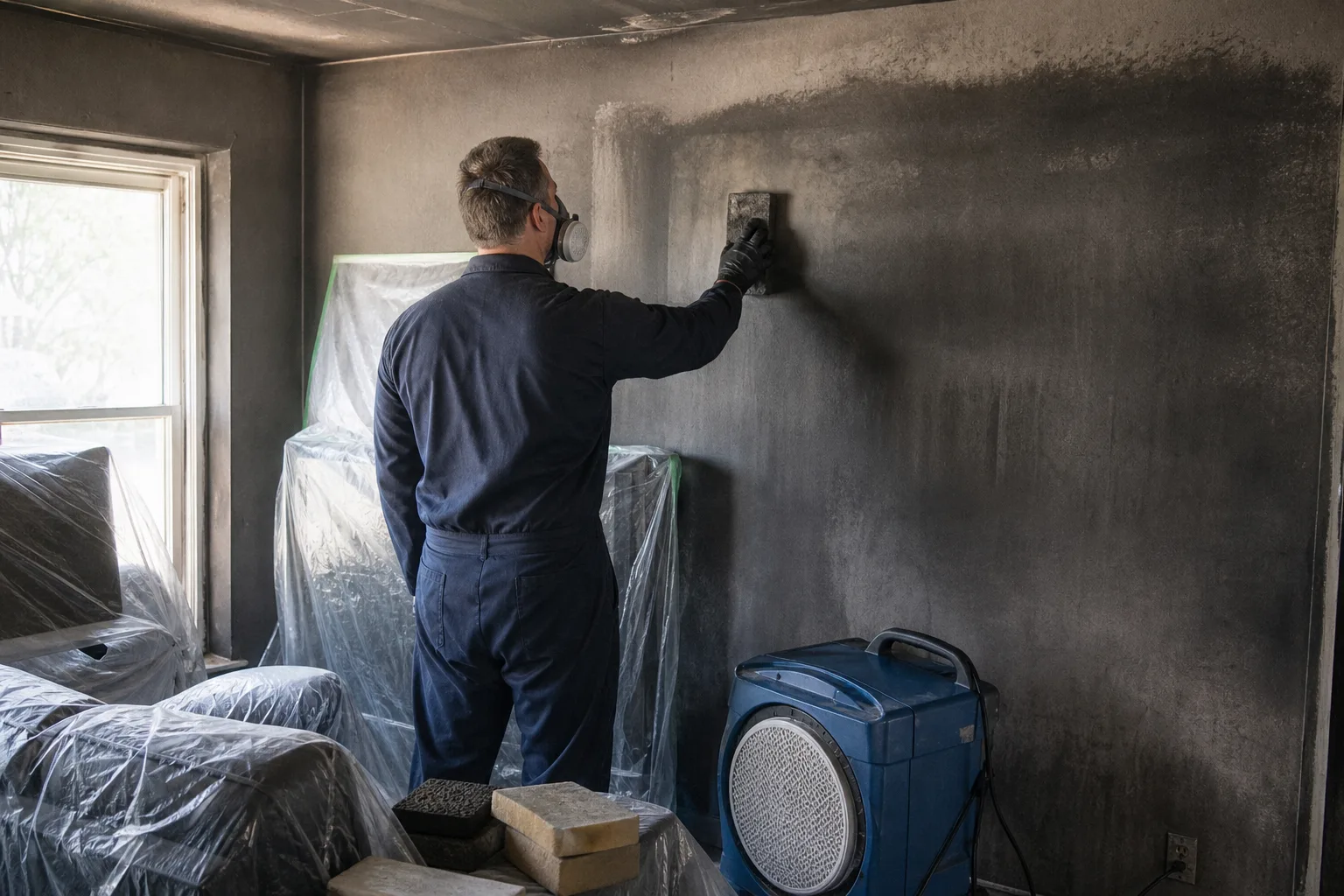
What you are seeing
The water that put the fire out is still in the building
Fire hoses and sprinklers put a large volume of water into a building in minutes. It lands on the fire floor, heads for the low rooms and pours through every gap into the levels below.
Gray or black water lying on your floors: Hose water mixed with soot and ash is sitting on the flooring.
Ceilings dripping one level down: Runoff from the fire floor has filled the cavity above you.
Wet insulation hanging from a cut ceiling: The attic or ceiling space caught water from the hoses.
Soaked rugs at the other end of the hall: Runoff crossed the floor into rooms the fire never entered.
Firefighters also cut into walls and ceilings to chase hidden flames. Those cuts let the water into cavities that would otherwise have stayed dry.
Wait for the fire department's all-clear, then call while the hose water is still on your floors and not yet deep in the framing.
(424) 437-1293Safety protocol
Treat hose water as contaminated
Loss risk
What firefighting water does to a burned structure
A burned building takes on water differently than one with a plumbing failure. Char is porous, the cut cavities lie bare, and the water comes in dirty.
- Charred lumber
Burned wood draws the runoff in and holds it under the char.
- Insulation
Wet insulation blankets and loose fill press water against your ceilings and wall cavities.
- Ceilings under the fire floor
Runoff fills the space above the ceiling board until it bows or comes down.
- Flooring and subfloor
Sooty water gets under boards and tile and marks them as it soaks.
Wet soot is also harder to clean than dry soot. Each day the runoff sits, it carries residue deeper into wood and gypsum board and sets the smoke odor with it.
Restoration scope
What firefighting water extraction and drying covers
This work takes the hose water out, removes the soaked materials past saving and dries the structure that stays. Repairs to burned lumber, closing up the building and new finishes belong to other trades.
- Sooty runoff extraction
Industrial extraction takes the fouled water off your floors, floor coverings and low rooms.
- Soaked insulation pull-out
Saturated insulation and ceiling board come out so the cavities can drain.
- Level-by-level tracing
Moisture readings chart the path of the hose water down through the building.
- Char-side drying
Controlled drying pulls moisture out of the wood under the char and the subfloors around it.
Service sequence
What happens to the hose water, step by step
Entry cleared
The fire department releases the building, and you keep the power off in the wet rooms.
Sooty runoff extracted
Extraction takes the hose water off each level, starting where it gathered.
Soaked ceilings dropped
Saturated ceiling board and insulation leave the cavities that held the runoff.
Char dried
Controlled drying works through the burned lumber and the subfloors on every wet level.
Levels compared
Readings on the wet levels match the parts of the building the hoses never reached.
Local detail
Hose water runs into the units under the fire
More than three in four Santa Monica homes are in multi-unit buildings. When the fire was upstairs, the hose water comes down through your ceiling, so call about your own unit even if nothing in it burned.
Triage order
What waiting adds after the fire is out
Hose water left in a burned building keeps sinking and spreading. A ceiling that could have drained in a controlled way falls, and a subfloor that could have dried in place has to come up.
Once the fire department clears the building, call about firefighting water extraction and drying at your Santa Monica property in Los Angeles County while the runoff is still shallow.
Scope: Emergency extraction and structural drying clearance only. Structural rebuild and finishing carpentry are contracted separately.
Service area
Santa Monica ZIP codes
- 90401
- 90402
- 90403
- 90404
- 90405
- 90406
- 90407
- 90408
- 90409
- 90410
- 90411
Every responding technician is independent. Before work begins, confirm the technician's license, insurance and pricing with them directly.
Common questions
Firefighting water extraction and drying questions in Santa Monica
Is the water from fire hoses clean?
No. It picks up soot, ash and debris as it runs through the burned areas, so treat it as contaminated.
How far can firefighting water travel?
It runs across the fire floor and drains into the levels below through ceilings, stairwells and wall cavities. Moisture readings mark where it ended.
Does the drying work include repairs to burned lumber?
No. Extraction and drying remove the water and the moisture. Repairs to burned or cut structure belong to other trades.
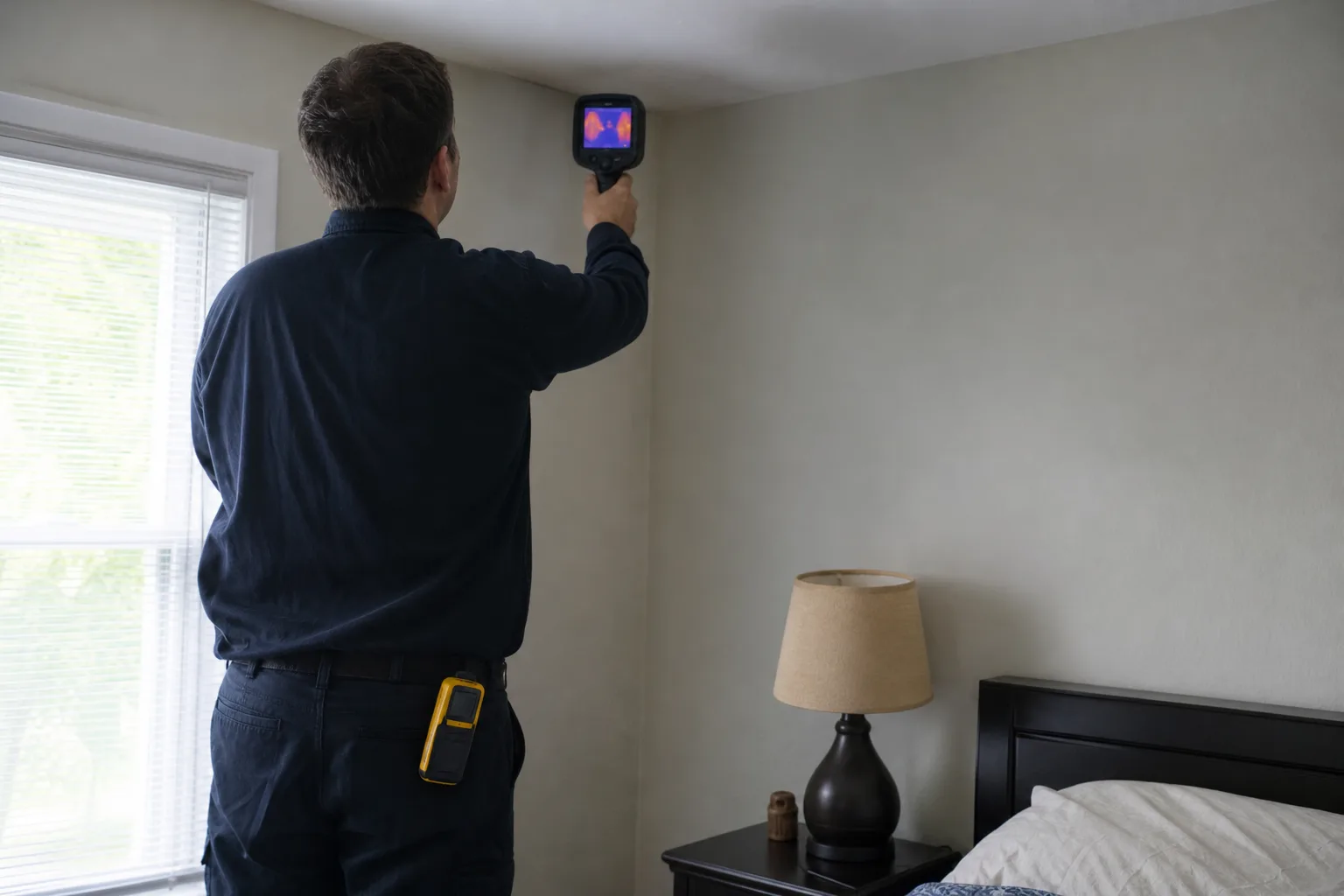
Water damage keeps spreading until it is dried.
Call from Santa Monica before the water reaches the next room, the subfloor or the framing behind your walls.